For the uninitiated – honey bees cluster in a ball in the winter to keep themselves warm. The bees shiver their wing muscles to generate heat. As the bees on the outside of the cluster cool down they move inward and warmer bees move outward. They maintain an internal cluster temp of 92℉ to 95℉. Right at 95℉ if they have brood, i.e. baby bees. As bees consume the honey in the lower box, the cluster moves upward to stores in the upper box. Ideally they will have enough stored honey to carry them through to spring.
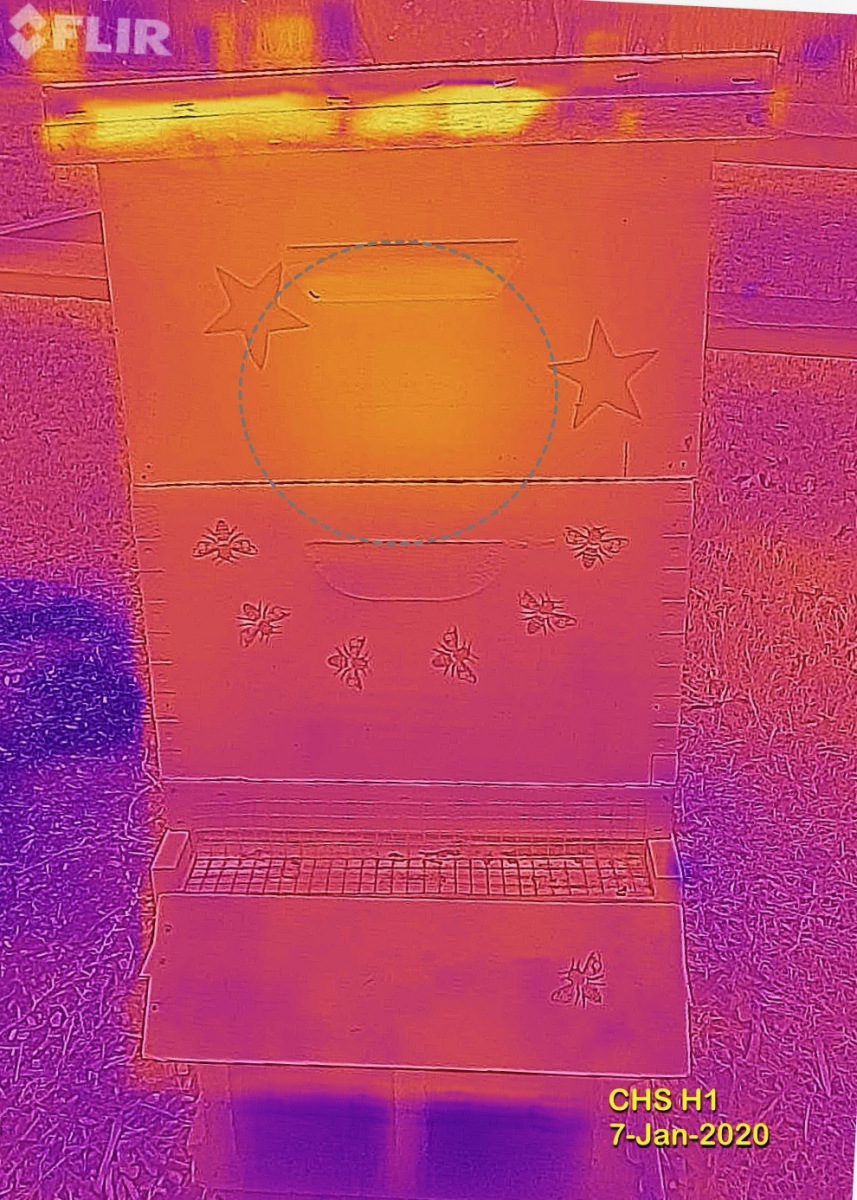
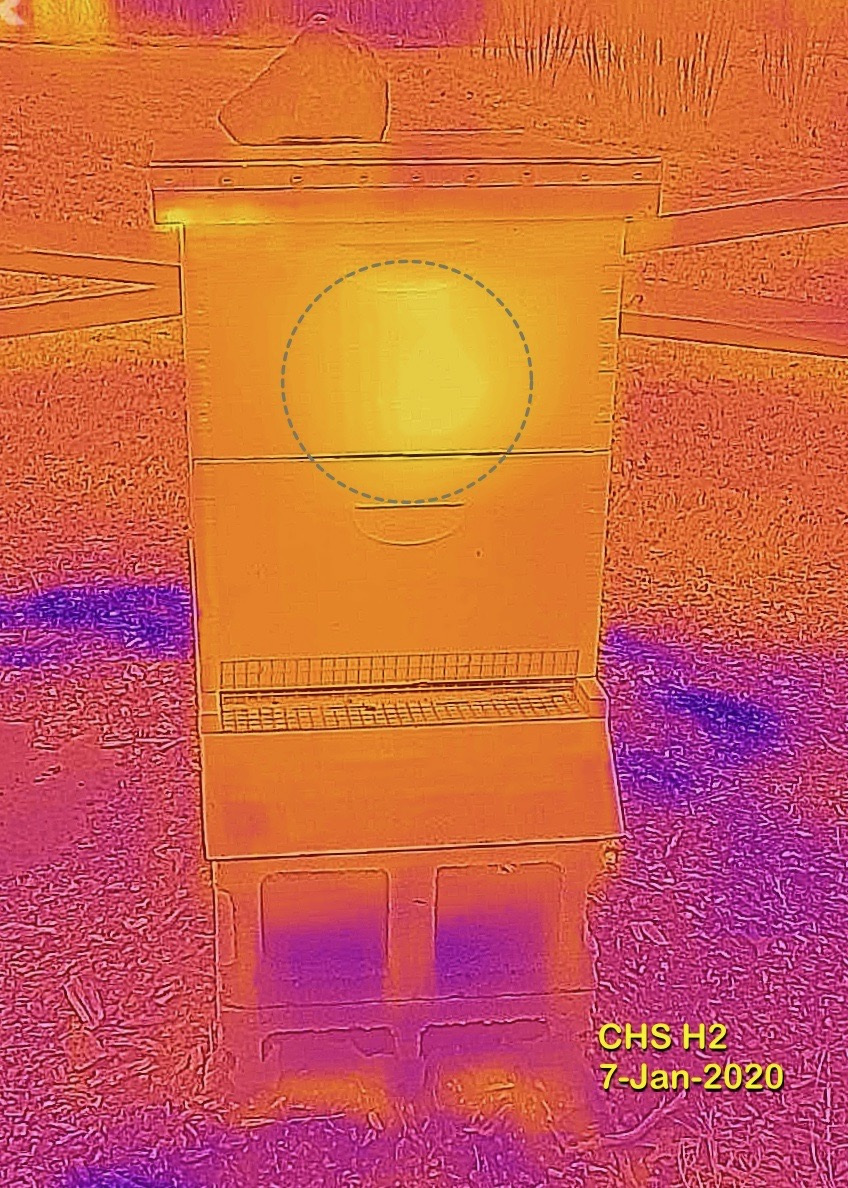
I inspected 3 hives during the first week of January. I didn’t open the hives. That would unecessarily chill the bees. Instead I photographed them with a heat sensing infrared camera. I now know where the cluster is located in each hive and based on the strength of the cluster’s heat signature I can make assumptions about the relative strength of each hive.
 The cluster of bees in the hive in my backyard (left) is still in the lower brood box. Based on the bright heat signature the cluster is large and has possibly started to brood up (the bright yellow-white center) to prepare for spring.
The cluster in Hive 1 at Carrboro High School (below) has already moved into the upper brood box as has the cluster in Hive 2. I assume that neither hive has brood at this time since there is not a bright core. The heat signatures for the two CHS clusters suggests that Hive 1 is less robust than Hive 2. Since the bees in Hives 1 and 2 are already in the upper brood boxes I anticipate that supplemental feeding will be required before spring.