
The Goldilocks Assessment
While the bees are clustered at the bivouac site, scout bees are out looking for new homes. The decision process is complex. The scouts assess the dimensions of potential new homes. Too small – rejected! Too large – rejected! Like Golidlocks, the scouts are looking for that “just right” home.
Multiple scouts evaluate multiple sites. All report back to the clustered swarm. Each scout presents her arguments in favor of the location that she has identified. Information about size, distance, and location are all communicated to the cluster with waggle dance routines. Ultimately, one of the scouts is more persuasive than the rest and the cluster takes flight. Everyone heads to the new hive.

The Carolina wrens were having a breakfast extravaganza. Wondering with each tasty beak full, “How do they get the honey sweet center inside?” Honey Nut Cheerios have got nothing Honey Crunch Bees.
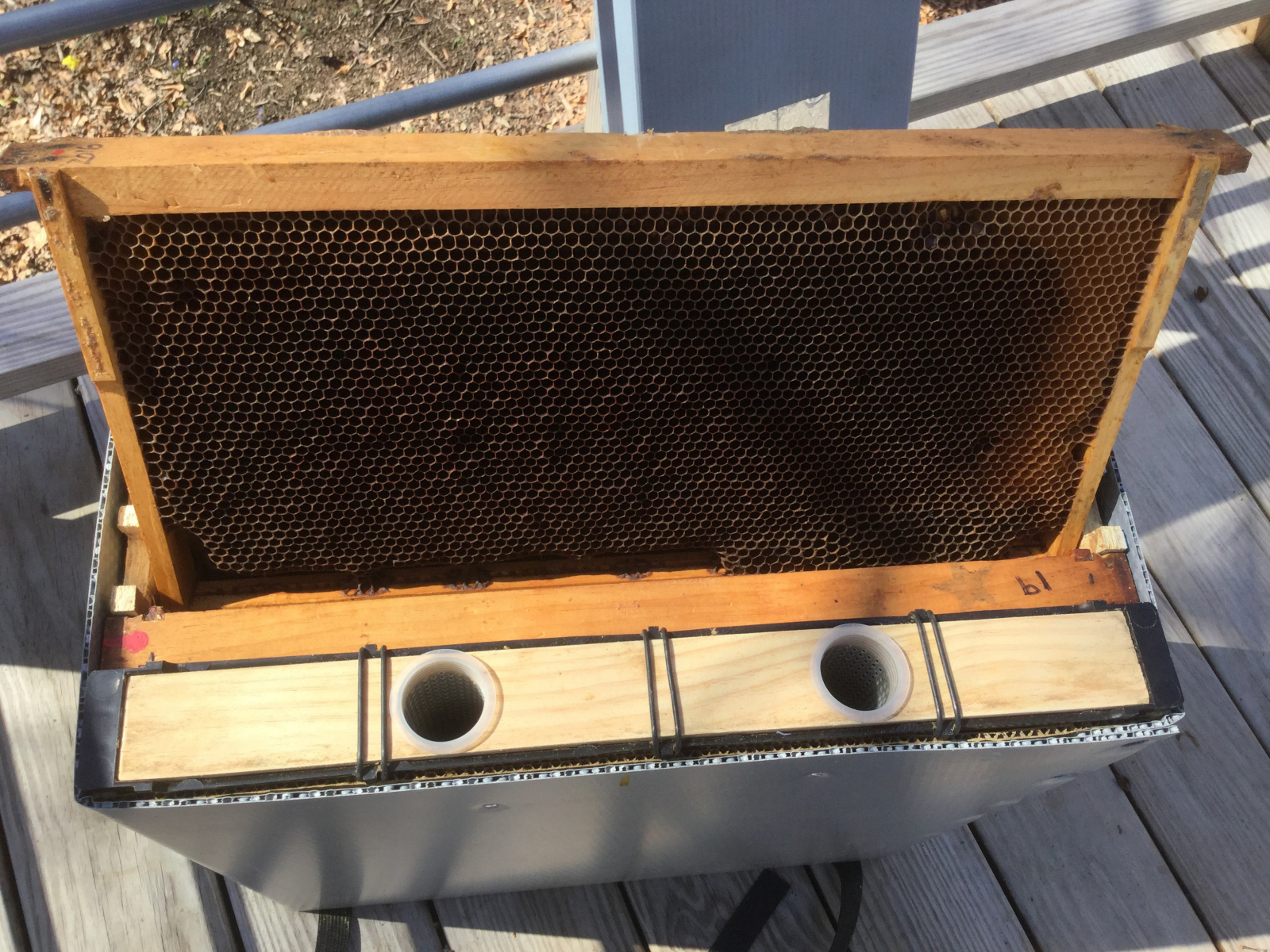
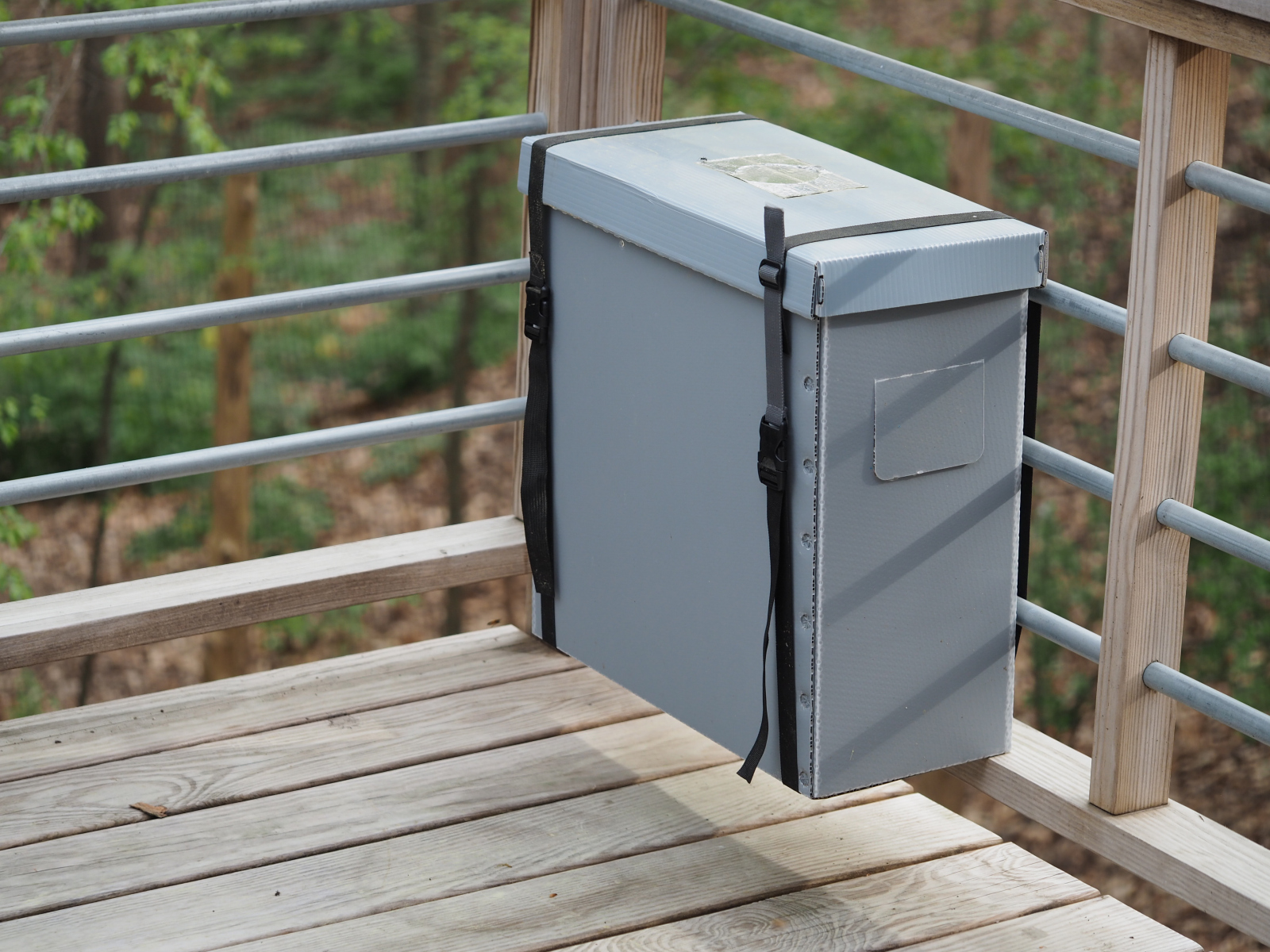
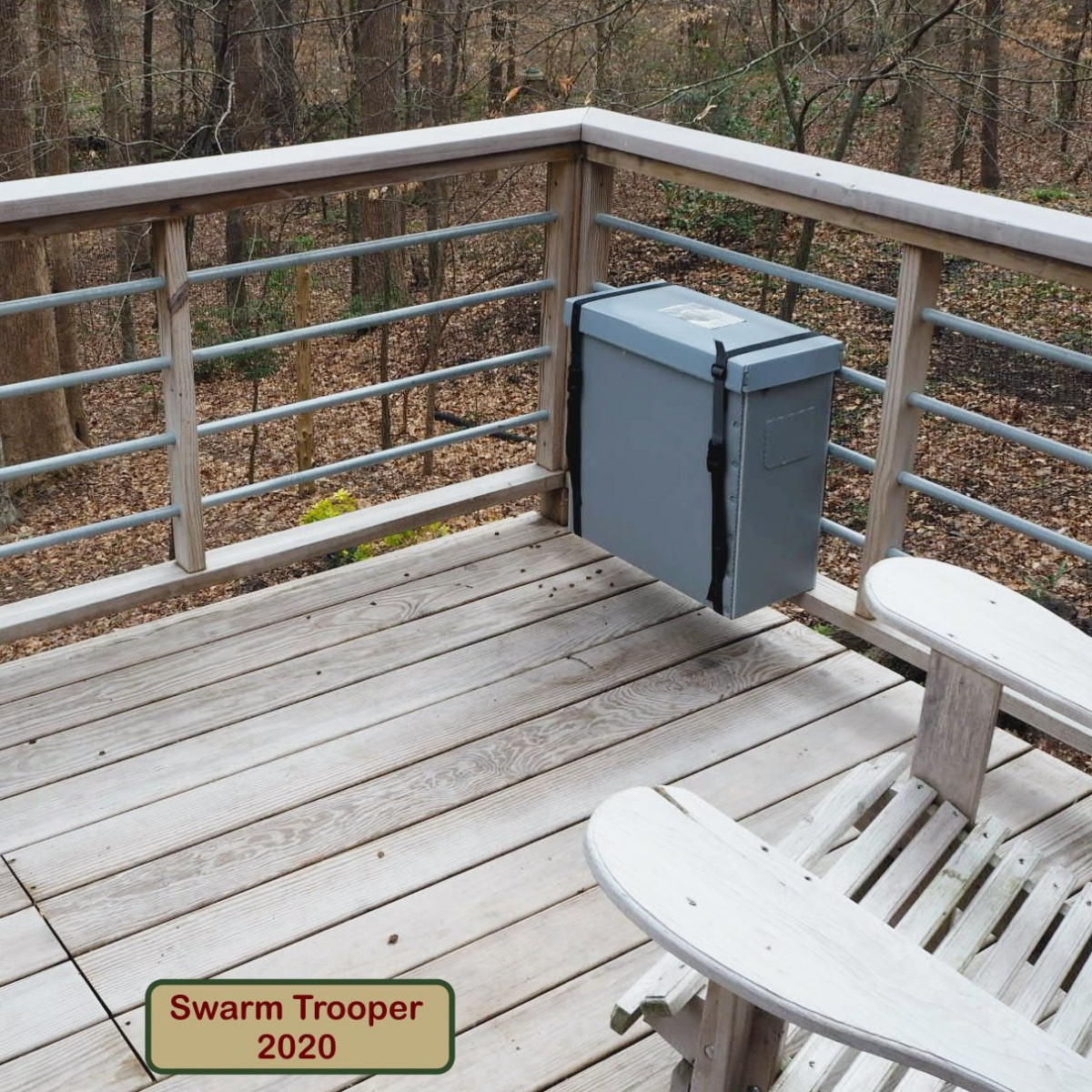
The swarm had arrived almost 18 hours ago. I was starting to worry that they would start building comb under the deck boards – completely ignoring the bait hive. So I took matters into my own hands. I lifted the lid of the hive box. I scooped up the largest group of bees from under the deck rail and dumped them unceremoniously into the box. I closed the top and stepped back to watch. If a beekeeper manages to get the queen into the box, the colony will pick up the scent and follow. They did.
Worker bees have a gland called the Nasonov gland in the terminal segments of their abdomen. They arc their abdomen to expose the gland by putting their butts in the air. Then they rapidly fan their wings to spread the pheromone scent. Bees from the colony pick up the scent (sometimes called the ‘come hither’ scent) and head in that direction. In this case, it took less than 3 minutes for the bees to start marching toward the hive entrance.
The video below is a composite of 2 video segments. In the first segment (about 30 seconds) you can see fanning bees taking up sentry positions on either side of the queue. Butts in the air. Nasonov gland exposed. Fanning their fannies off to let everyone else know that they are on the right path. The military procession stays inside the pheromone defined lines. “Just keep moving. Follow the bees ahead of you. Stay in line. There’s plenty of room for everyone.”
My son got a great picture a few years ago of Nasonov fanning. That shiny bulge at the end is the gland. It is not usually visible as you can tell from some of the other bees at rest.
