Colorful Queens

A friend recently expressed surprise when she learned that the queen in one of my hives was marked with a green dot. I explained that many beekeepers mark the queen bee in each hive with a dab of paint. Seasoned beekeepers  mark their queens because they can easily determine when the colony has replaced the queen. New beekeepers often purchase marked queens because a marked queen is easier to find in a crowded hive. Queen spotting is a beekeeping skill that typically comes only with experience.

After learning that queens are marked, her next question was, “How on earth would anyone do that?”

To understand queen marking it helps to understand a bit about honey bee anatomy. As you can see in the picture below, the thorax of worker bees is covered with fine hairs (the better to attract pollen). By comparison, the thorax of the queen provides a bald, easily painted signalling billboard.

When it comes to queen marking technique, there are as many ways to accomplish that task as there are beekeepers. I have a couple of tools that I rely on. The first tool resembles a child’s bubble pipe. Once I find the queen I can quickly capture her by pulling the large foam plug from the bowl end of the pipe and placing it over the queen as she moves across the comb. As soon as she is in the pipe the foam is replaced.


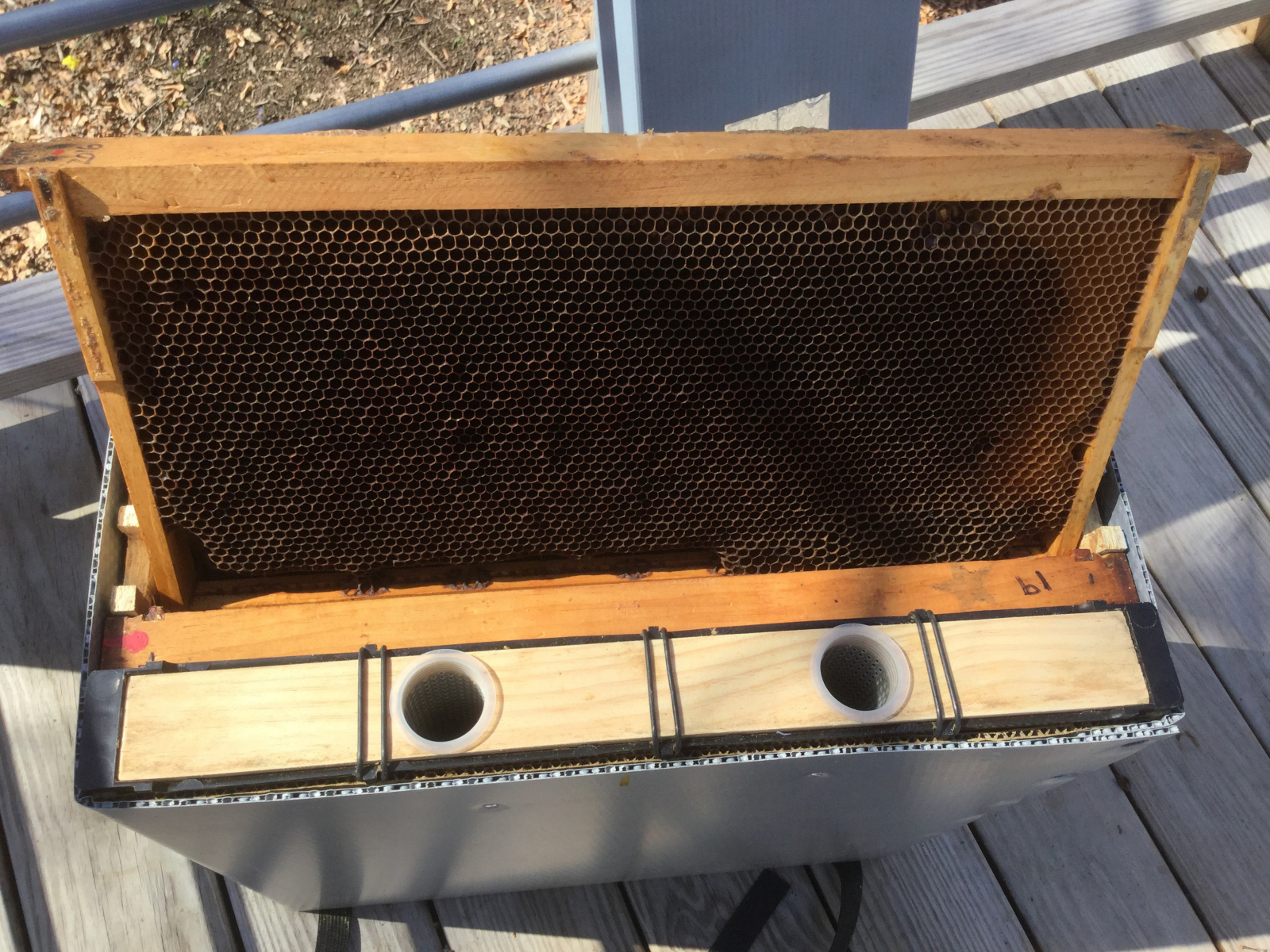
The second tool that comes into play is the marking tube. A marking tube is equally simple – a foam topped piston sliding in a plastic cylinder. The queen is transferred from the pipe to the marking tube. The piston is used to gently push her to the marking screen at the top of the cylinder. Once in position, a marking pen is used to daub a spot of paint on her thorax.

You may have noticed that queens are marked with different colors. There is an international marking scheme that allows beekeepers to know at a glance the approximate age of the queen. A rotating sequence of five colors is used depending on the ending digit of the year that the queen was born.

White— for years ending in 1 or 6
Yellow — for years ending in 2 or 7
Red —– for years ending in 3 or 8
Green — for years ending in 4 or 9
Blue —- for years ending in 5 or 0

After the queen is marked she’s left in the marking tube for a few minutes to allow the paint to dry. If she’s returned to the hive too soon there is a possibility that the workers will simply clean the paint off of her.

Once marked she is easily found by new and experienced beekeepers alike.
 

Finding a New Home


The Goldilocks Assessment

While the bees are clustered at the bivouac site, scout bees are out looking for new homes. The decision process is complex. The scouts assess the dimensions of potential new homes. Too small – rejected! Too large – rejected! Like Golidlocks, the scouts are looking for that “just right” home.

Multiple scouts evaluate multiple sites. All report back to the clustered swarm. Each scout presents her arguments in favor of the location that she has identified. Information about size, distance, and location are all communicated to the cluster with waggle dance routines. Ultimately, one of the scouts is more persuasive than the rest and the cluster takes flight. Everyone heads to the new hive.

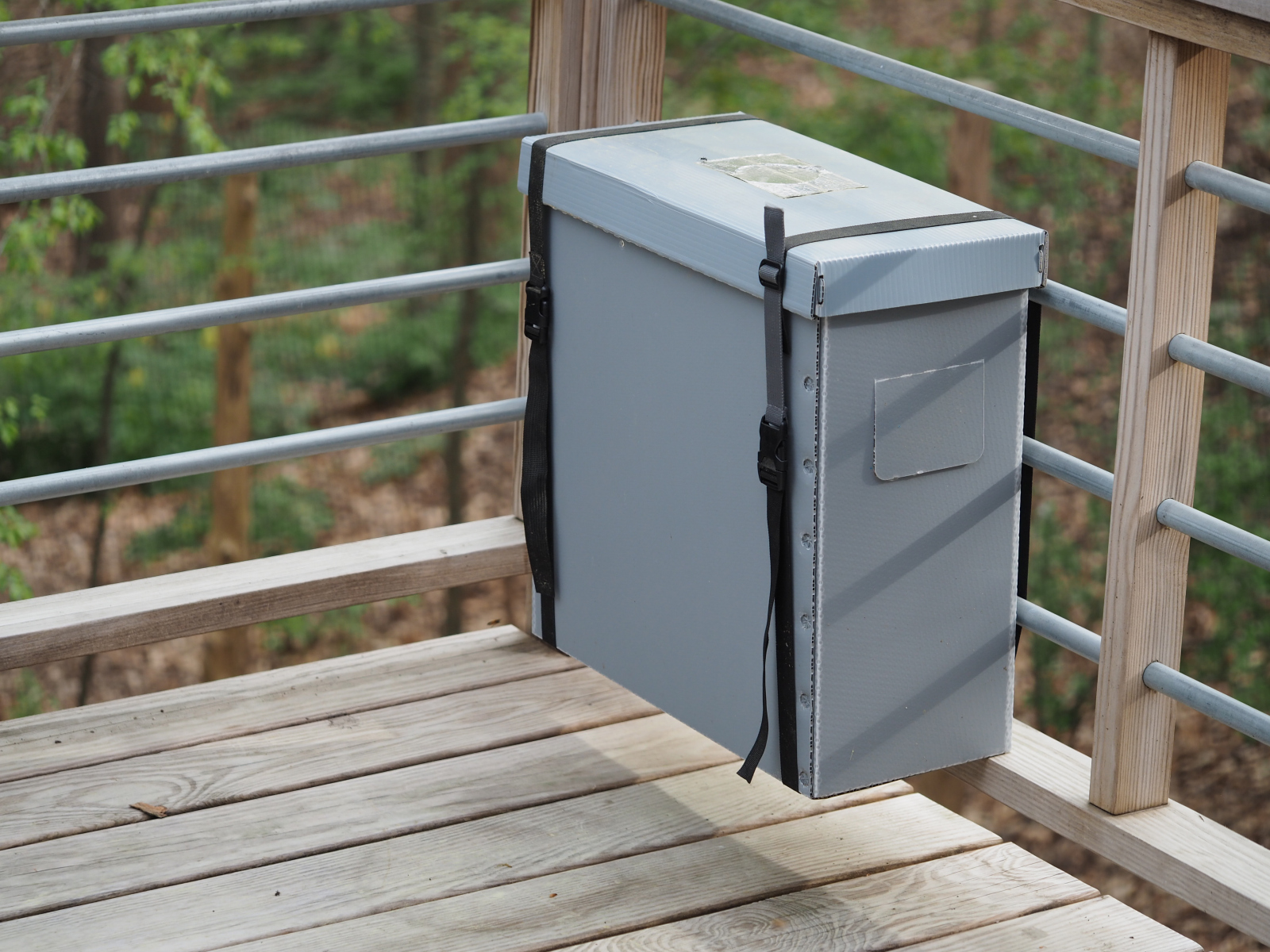
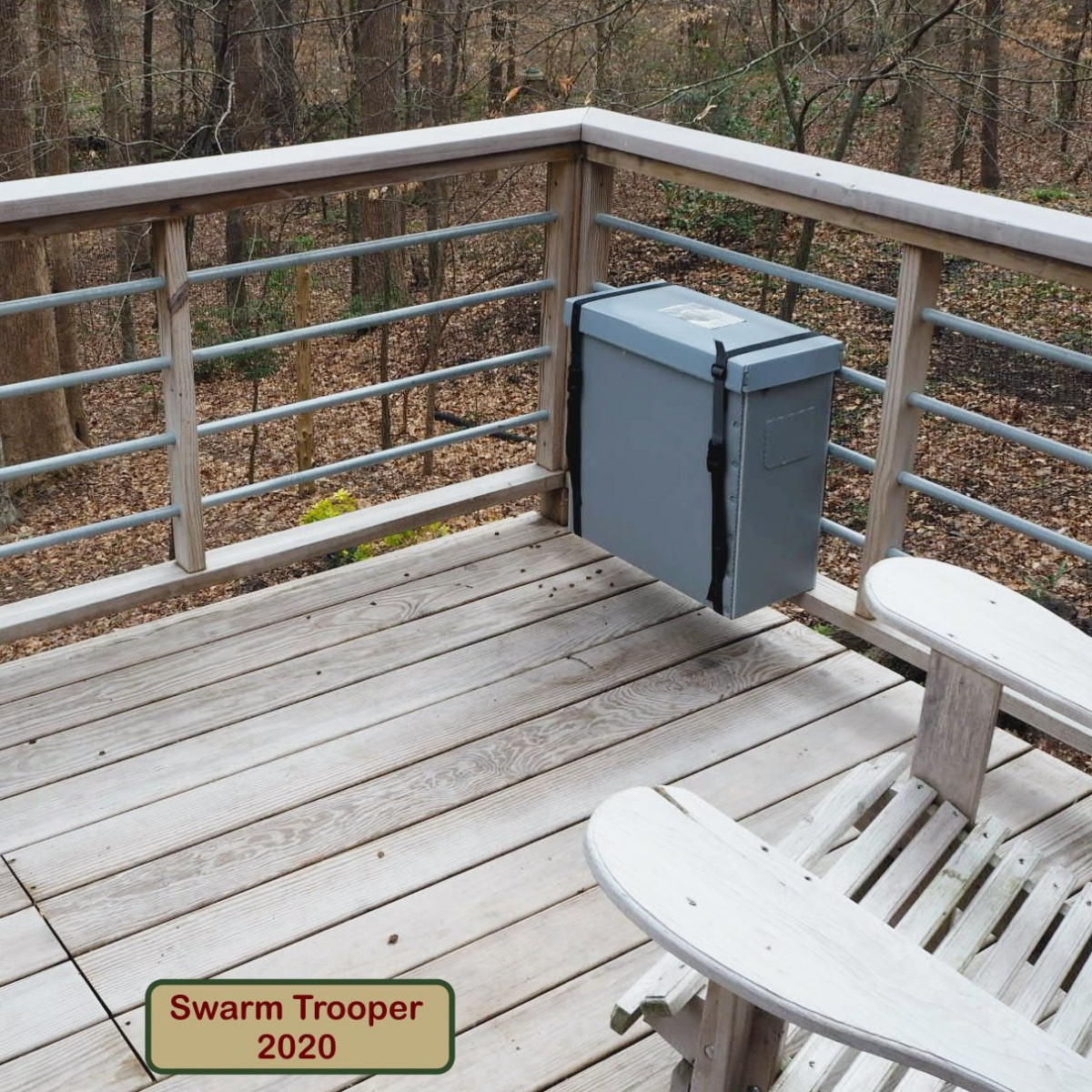
In the first 5 days of April I went out and collected 5 swarms of bees. On the 6th day, swarm #6 saved me the trip.  They came directly to the bait hive on our deck.

As the swarm arrived it formed a bivouac cluster within inches of the bait box.
I was excited by the sheer size of the cluster. Since it was a fairly large swarm I anticipated that it would take a while for them to file in to the narrow entrance to the swarm box. The plan was for the little buggers to eventually walk 4” to the hive entrance and take up residence. Many did. Many, many did not. Dawn the following day found platoon-like encampments bivouacked under the box. Many more stragglers were still clinging to the deck posts.

The Morning After – Bivouacked Bees

The Carolina wrens were having a breakfast extravaganza. Wondering with each tasty beak full, “How do they get the honey sweet center inside?” Honey Nut Cheerios have got nothing Honey Crunch Bees.

The swarm had arrived almost 18 hours ago. I was starting to worry that they would start building comb under the deck boards – completely ignoring the bait hive. So I took matters into my own hands. I lifted the lid of the hive box. I scooped up the largest group of bees from under the deck rail and dumped them unceremoniously into the box. I closed the top and stepped back to watch. If a beekeeper manages to get the queen into the box, the colony will pick up the scent and follow. They did.

Worker bees have a gland called the Nasonov gland in the terminal segments of their abdomen. They arc their abdomen to expose the gland by putting their butts in the air. Then they rapidly fan their wings to spread the pheromone scent. Bees from the colony pick up the scent (sometimes called the ‘come hither’ scent) and head in that direction. In this case, it took less than 3 minutes for the bees to start marching toward the hive entrance.

The video below is a composite of 2 video segments. In the first segment (about 30 seconds) you can see fanning bees taking up sentry positions on either side of the queue. Butts in the air. Nasonov gland exposed. Fanning their fannies off to let everyone else know that they are on the right path. The military procession stays inside the pheromone defined lines. “Just keep moving. Follow the bees ahead of you. Stay in line. There’s plenty of room for everyone.”

The 2nd segment (better lighting) was made after the rush was on. “The Queen concert has started. Hurry! Hurry! You don’t want to miss a second of it.” They all push forward in a mad scramble, sometimes running over the guide bees. And that dead bee to the side of the entrance. What’s the story there? Was it trampled to death or did it die of excitement? We’ll never know. Would someone just move it?! 

My son got a great picture a few years ago of Nasonov fanning. That shiny bulge at the end is the gland. It is not usually visible as you can tell from some of the other bees at rest.


Housing is Tight

April is swarm season. Honey bee reproduction does not take place at the ‘lay an egg, hatch a new bee’ level. It takes place when the colony as a whole decides that it is time to swarm. That decision is made by the entire colony – a superorgamism.

Spring build up, too many bees. Somebody has got to go!

In the spring, when the colony broods up and has so many bees that they cannot physically co-exisit in a single hive the decision to swarm is made. First the nurse bees start nourishing a few newly hatched larvae with an exclusive diet of royal jelly. That rich diet triggers epigenetic differences in the larva resulting in the birth of a queen. The same larva on a different diet would become a worker bee. Same initial genetics + different diet = queen instead of worker. 

Meanwhile the worker bees start harassing the existing queen. They chase her around the hive. They cut back on the amount of food that she gets. In effect, they put her on a diet and fitness regime. This allows her to drop weight and strengthen her flying muscles. When the time comes she will abandon the original colony, taking about half of the bees with her. This is a swarm.  Off they go to form a new colony!

The swarming event is triggered by the capping of the first queen cell in the original colony. At that point the original colony is feeling pretty confident that a new queen is on the way. Out with the old queen and in with the new.

No one like to travel on an empty stomach

Before the swarm departs all of the departing bees fill up their stomachs with honey. They will need these resources to establish a new colony. 

The swarm departs with a roar. Imagine the hum of 20,000+ bees taking flight. They pour out of the hive in a stream. They swirl around loudly in the air,  and eventually coalesce into a bee comet that heads off toward a preselected bivouac site. If you’ve experienced it, you’ll never forget it. It is amazing!

Bivouacked swarm at CORA Community Garden

At the bivouac site, they settle – forming a tight cluster. While clustered their brains reset. They forget the location of their original hive. They start to formulate a “what’s next” plan. What’s next is finding a new home.